By Michael Phillips | Thunder Report / Tech Bay News
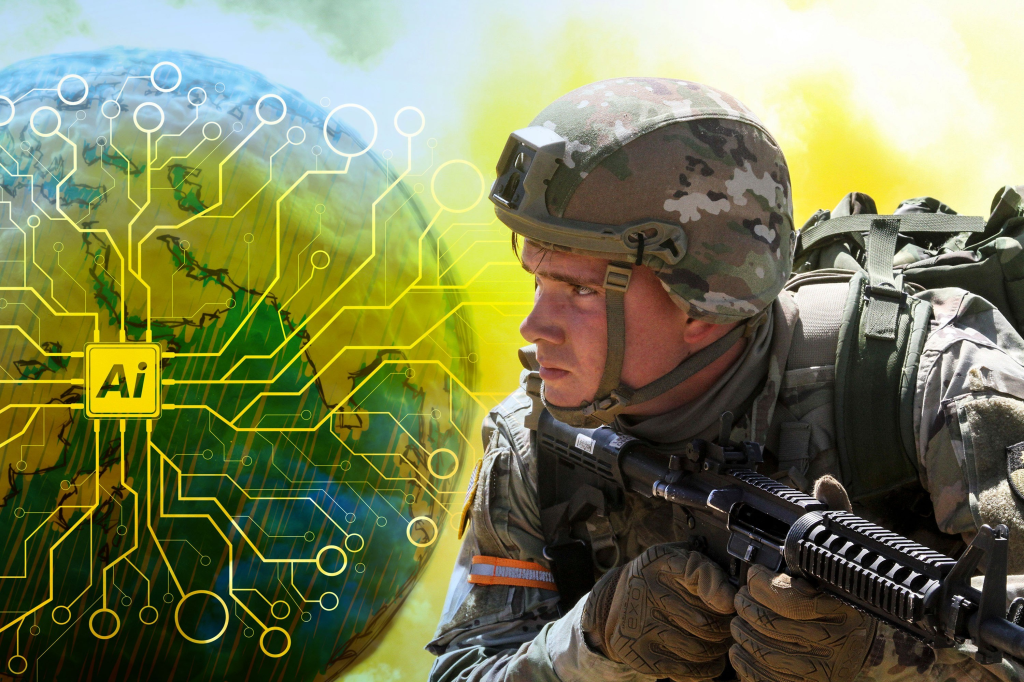
The United States Army is taking a decisive step into the future of warfare with the formal creation of a new officer career path dedicated to artificial intelligence and machine learning. Announced December 30, 2025, the service has established Functional Area 49B (AI/ML Officer)—a specialized concentration designed to embed uniformed AI expertise directly into operational units.
The move reflects a sober recognition inside the Pentagon: future conflicts will be decided as much by data, algorithms, and speed of decision-making as by traditional firepower.
A Strategic Shift, Not a Tech Gimmick
Army leaders describe 49B as part of a broader push toward a data-centric, AI-enabled force, capable of operating faster and more effectively in complex, contested environments. Rather than outsourcing AI knowledge to contractors or isolating it in labs, the Army is building an internal cadre of officers who can translate advanced technology into battlefield advantage.
Lt. Col. Orlandon Howard, an Army spokesperson, called the new specialty “a deliberate and crucial step” to maintain a decisive edge, emphasizing that AI officers will help commanders “outthink, outpace, and outmaneuver any adversary.”
That language matters. This is not about replacing soldiers with machines—it is about accelerating human judgment when seconds matter.
What AI Officers Will Actually Do
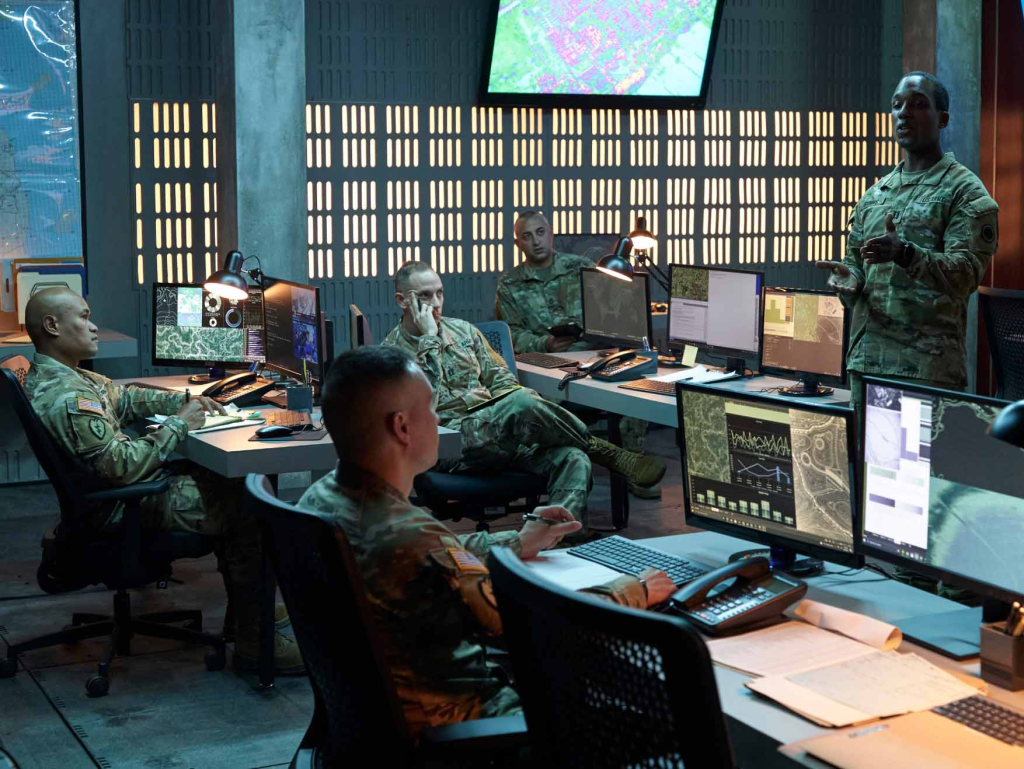
Officers designated under Functional Area 49B will focus on operationalizing AI across core warfighting functions, including:
- Battlefield decision support: Fusing sensor, drone, satellite, and intelligence data to compress decision cycles.
- Logistics and maintenance: Using predictive analytics to anticipate equipment failures and supply needs.
- Autonomous and robotic systems: Managing and integrating unmanned platforms and future swarm technologies.
- Command and control: Supporting next-generation C2 systems that function in denied or degraded environments.
These roles align closely with ongoing Army initiatives such as Project Convergence, where AI-enabled systems have already demonstrated faster sensor-to-shooter timelines and improved situational awareness during large-scale exercises.
Who’s Eligible—and How It Works
Initially, the AI/ML officer specialty is open to officers eligible for the Army’s Voluntary Transfer Incentive Program (VTIP). Competitive candidates are expected to have advanced degrees or demonstrated technical experience in fields such as artificial intelligence, machine learning, data science, or computer science.
Applications open in early January 2026, with selections reclassified by the end of fiscal year 2026. Training will include graduate-level education combined with hands-on experience developing, deploying, and sustaining AI systems—an indication that the Army intends these officers to be practitioners, not just theorists.
The service has also signaled that expansion to warrant officers may follow, mirroring similar moves in robotics and technical specialties introduced in 2025.
Why This Matters Beyond the Pentagon
From a national security perspective, the creation of Functional Area 49B is a tacit acknowledgment of strategic realities. Near-peer competitors—particularly China—are investing heavily in “intelligentized” warfare, autonomous systems, and AI-enabled command structures. Falling behind is not an option.
At the same time, embedding AI expertise within the officer corps helps address legitimate concerns about accountability, ethics, and over-reliance on automation. Uniformed officers operate under clear chains of command and rules of engagement—something no contractor or black-box system can replace.
Still, risks remain. Automation bias, algorithmic opacity, and vulnerabilities to adversarial attacks are real challenges. The Army insists that AI will remain human-in-the-loop, supporting—not replacing—command decisions, especially when lethal force is involved. Whether that balance holds under combat pressure will be one of the defining questions of modern warfare.
The Bigger Picture
This is the first new Army officer career field in over a year, and its timing is telling. AI is no longer a future concept or pilot program—it is becoming a permanent feature of military structure and culture.
For the Army, Functional Area 49B represents an effort to institutionalize innovation without losing control of it. For the country, it signals that the era of algorithmic warfare has arrived—and that the U.S. intends to meet it with disciplined professionals, not unchecked automation.
As implementation begins in 2026, the success or failure of this new AI officer corps will offer an early glimpse into how well America’s military can adapt to a world where wars are increasingly fought at machine speed.



 TechBay.News
Leave a comment