By Michael Phillips | TechBay.News
Artificial intelligence is poised to do more than transform the workplace — it is set to redefine life inside the home.
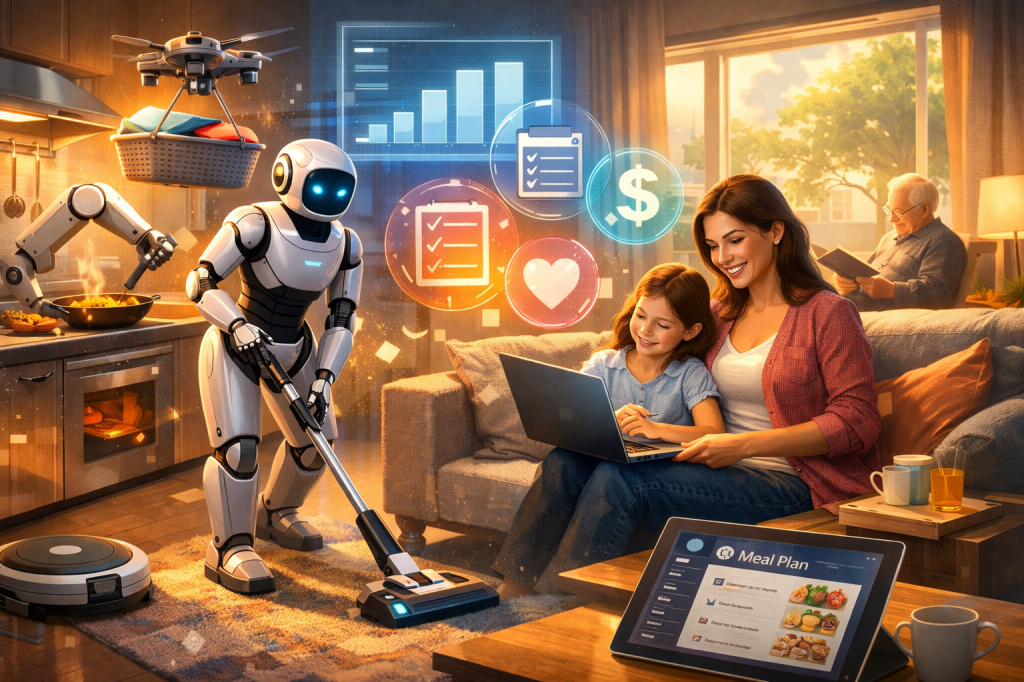
That is the message from OpenAI’s chief economist, who argues that tools like ChatGPT and advanced AI assistants will free millions from mundane chores and, in the process, reveal a vast source of “hidden productivity” that traditional economic measures overlook.
Household labor has never been counted in the same way as formal economic output. Tasks like cooking, cleaning, organizing schedules or managing logistics are essential but invisible in gross domestic product figures. OpenAI’s research suggests AI can slash the time families spend on these duties — reducing, for example, food preparation time by up to 75 percent with AI guidance — and in doing so free up hours for paid work, leisure, or time with loved ones.
For the center-right observer, this story is about empowerment, not replacement. AI does not supplant human agency; it amplifies it. Automation inside the home mirrors broader economic history: mechanization of household tools like washing machines and dishwashers liberated vast amounts of personal time. But generative AI goes further because its benefits are not confined to individual devices — they accrue through enhanced planning, personalized instruction, and real-time assistance across multiple tasks at once.
This rethinking of productivity aligns with conservative principles that prize individual choice, private initiative, and the dignity of work — not just work done for pay. Time spent raising children, caring for elderly relatives, volunteering in communities, and managing a household are real contributions to social wellbeing. By enabling families to accomplish more without long hours of drudgery, AI could help rebalance life in favor of these pursuits.
Skeptics rightly point out the limits of current productivity statistics, which struggle to capture gains outside formal market transactions. Tools like ChatGPT, effectively acting as personal assistants for millions worldwide, demonstrate value that never surfaces in GDP figures but is nonetheless real. From helping plan meals and troubleshoot repairs, to drafting correspondence and managing personal finances, AI is quietly expanding the sphere of human capability.
Of course, concerns remain. Some economists question whether AI’s gains will be broadly shared or whether the productivity narrative obscures labor displacement risks in other sectors. Yet when it comes to household labor — long undervalued and largely unpaid — the potential upside is undeniable: more time, greater flexibility, and a chance for families to focus on what matters most.
In an era where technological optimism is often met with skepticism, the case for AI as a household ally deserves serious consideration. If generative AI can relieve families of repetitive chores and unlock hidden “productive” time, it won’t just change how we work — it will change how we live.




 TechBay.News
Leave a comment