By Michael Phillips | TechBayNews
The legal fight over artificial intelligence and copyright law is entering a decisive phase in 2026, with U.S. courts poised to shape the future economics of generative AI. A new analysis from Reuters outlines how judges, creators, and technology companies are clashing over a core question: can copyrighted works be used to train AI systems under the doctrine of fair use, or must companies license and pay for that content?
At stake is not only the financial liability of major tech firms, but whether the current pace of AI innovation can continue without fundamentally reshaping how data is acquired and monetized.
A Defining Question for AI’s Future
Generative AI systems rely on vast amounts of text, images, music, and video—much of it copyrighted. Companies such as OpenAI, Google, and Meta argue that using this material for training is “transformative,” producing new outputs rather than competing directly with original works.
Opponents, including major publishers and creative industries, counter that this mass copying undermines the economic incentives copyright law is meant to protect—especially if AI-generated content floods markets traditionally served by human creators.
Mixed Signals From the Courts in 2025
Federal judges sent conflicting signals last year, setting the stage for continued uncertainty:
- In San Francisco, Judge William Alsup characterized AI training as “quintessentially transformative,” suggesting it advances knowledge rather than simply reproducing protected works.
- Yet Alsup also held Anthropic liable for storing millions of pirated books in a non-training “central library,” a ruling that helped drive a reported $1.5 billion class-action settlement with authors—the largest known U.S. copyright payout to date.
- Judge Vince Chhabria, also in San Francisco, ruled in Meta’s favor in a related case but warned that AI training would not qualify as fair use “in many circumstances,” citing the risk of market saturation and harm to creators.
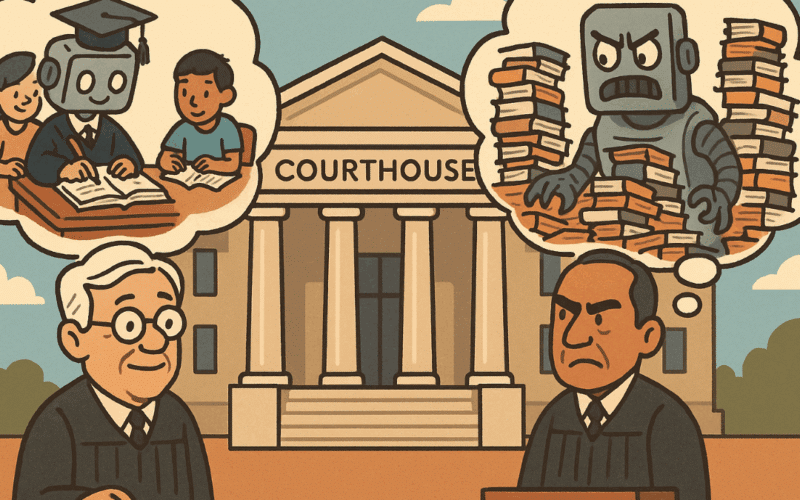
The contrast highlights a philosophical divide: whether AI is more like education that spurs innovation, or a disruptive force that could hollow out creative industries.
Big Money, Big Compromises
While litigation continues, some companies are hedging their bets through licensing deals rather than courtroom victories.
Entertainment giant Disney invested $1 billion in OpenAI and licensed characters for AI video generation tools. Media and music companies have reached settlements or partnerships with AI firms, and even Reuters’ parent company, Thomson Reuters, has licensed content to Meta.
These deals suggest a pragmatic recognition that, regardless of how courts rule, licensing may become a parallel—or even dominant—model for AI development.
Why 2026 Matters
More rulings are expected this year involving AI music tools, visual artists, and large-scale model developers. Decisions could clarify fair use standards—or deepen legal fragmentation across jurisdictions.
From a center-right perspective, the challenge is striking a balance: preserving America’s innovation edge while respecting property rights that underpin free markets. Overly restrictive rulings risk entrenching only the largest players who can afford licensing at scale. But unchecked copying could erode the creative economy that fuels culture, media, and entrepreneurship.
As courts weigh these competing interests, 2026 may determine whether generative AI grows under broad fair use protections—or evolves into a more tightly licensed, and potentially more expensive, ecosystem. Either way, the outcome will ripple across technology, media, and the global digital economy.




 TechBay.News
Leave a comment