The United States Army has quietly crossed a major milestone in armored modernization with the completion of the first M1E3 Abrams prototype—an early but significant step toward replacing decades of incremental upgrades with a fundamentally redesigned main battle tank.
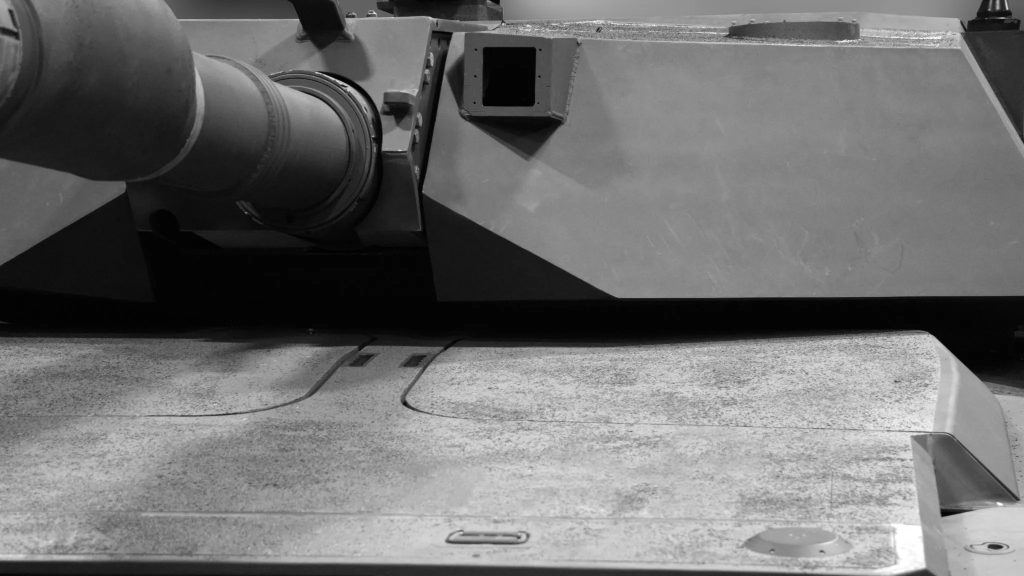
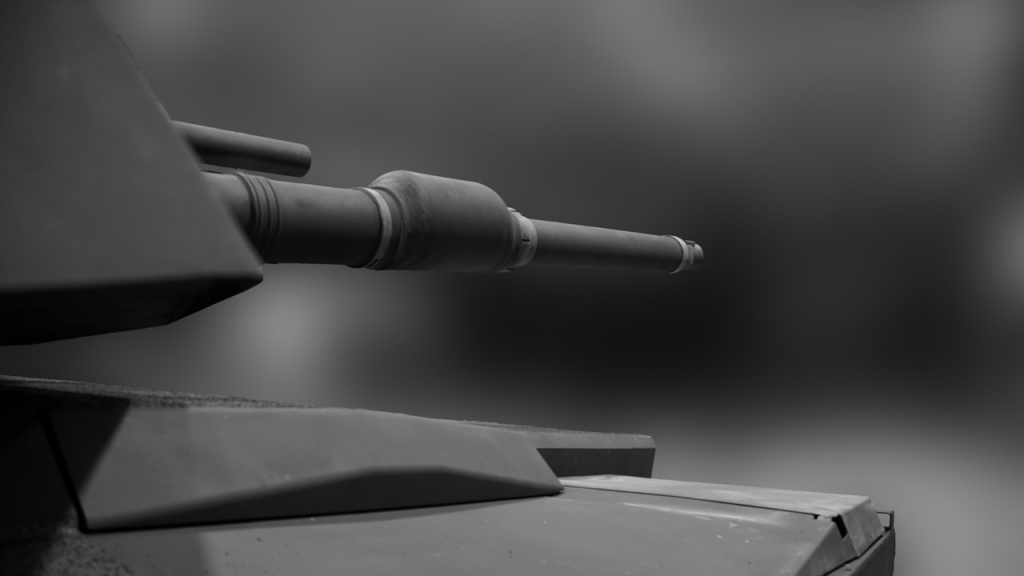
According to reporting published January 8, 2026, the Army revealed the prototype through official social media posts featuring two tightly cropped, grayscale images of the tank’s turret. The images offer only a partial glimpse, but they confirm that the long-anticipated M1E3 program has moved from concept into physical hardware.
“This milestone proves the Army’s ability to rapidly apply lessons learned and deliver enabling technologies to Soldiers faster than ever before,” one Army post declared.
A Prototype Shrouded in Secrecy
The teaser images avoid showing the full vehicle, focusing instead on the turret from different angles. While no specifications were released, analysts quickly noted several visible changes, including what appears to be a new sensor window to the left of the main gun mantlet, updated LED lighting, and other potential camera or sensor additions aimed at improving situational awareness.
The Army confirmed the prototype was produced by Roush, a Michigan-based engineering firm known for advanced automotive and defense work. Officials emphasized three core attributes of the new design:
- Advanced software integration
- Enhanced mobility
- Unmatched lethality
Beyond those broad descriptors, details such as weight, armor composition, powerplant, or armament remain classified or unannounced.
Why the M1E3 Matters
The M1E3 represents a strategic pivot away from endlessly upgrading the existing M1 Abrams platform, which has been in service for 46 years. In 2023, the Army canceled a planned Abrams enhancement program after concluding that the tank could no longer absorb new capabilities without becoming heavier, harder to sustain, and more logistically burdensome.
Then–Program Executive Officer Maj. Gen. Glenn Dean summarized the problem bluntly at the time: the Abrams could not continue to grow without sacrificing mobility and efficiency. The war in Ukraine, with its widespread use of drones, top-attack munitions, and precision anti-armor weapons, underscored the need for integrated survivability, rather than bolt-on defenses.
The M1E3 is designed from the ground up to reflect those lessons.
Built for Drone-Heavy, Networked Battlefields
While still officially a technology demonstrator, the M1E3 is expected to incorporate several transformative concepts drawn from Army statements and defense reporting:
- A lighter overall design to reduce fuel and transport demands
- Improved fuel efficiency, potentially via a hybrid powerplant replacing the Abrams’ traditional gas turbine
- A modular, software-driven architecture that allows faster upgrades
- Enhanced active protection systems to counter drones and top-attack threats
- Improved sensors and networking for modern combined-arms warfare
Some long-term concepts, such as crew reduction or an autoloader, remain speculative but reflect the Army’s broader push toward adaptability and survivability.
Timeline and Funding
Testing of the prototype is set to begin in early 2026, with additional prototypes expected later this year. Despite the rapid delivery of the first vehicle—completed in late 2025—the Army is still targeting initial operational capability in the early 2030s.
To support this effort, the Army has requested $723.5 million in its fiscal year 2026 budget for Abrams modernization, signaling that the M1E3 is not a side project but a central pillar of future armored forces.
A Quiet but Important Signal
The Army’s understated reveal contrasts sharply with the program’s strategic importance. Even with limited imagery and few confirmed details, the M1E3 announcement sends a clear message: the Abrams’ future will not be defined by incremental patches, but by a clean-sheet rethink tailored to drone-saturated, cyber-contested battlefields.
More information is expected to emerge in the coming months as testing begins and the Army decides how much of the M1E3’s design it is ready to show the public. For now, the prototype stands as a tangible sign that the Army is serious about reimagining heavy armor for the wars of tomorrow.



 TechBay.News
Leave a comment