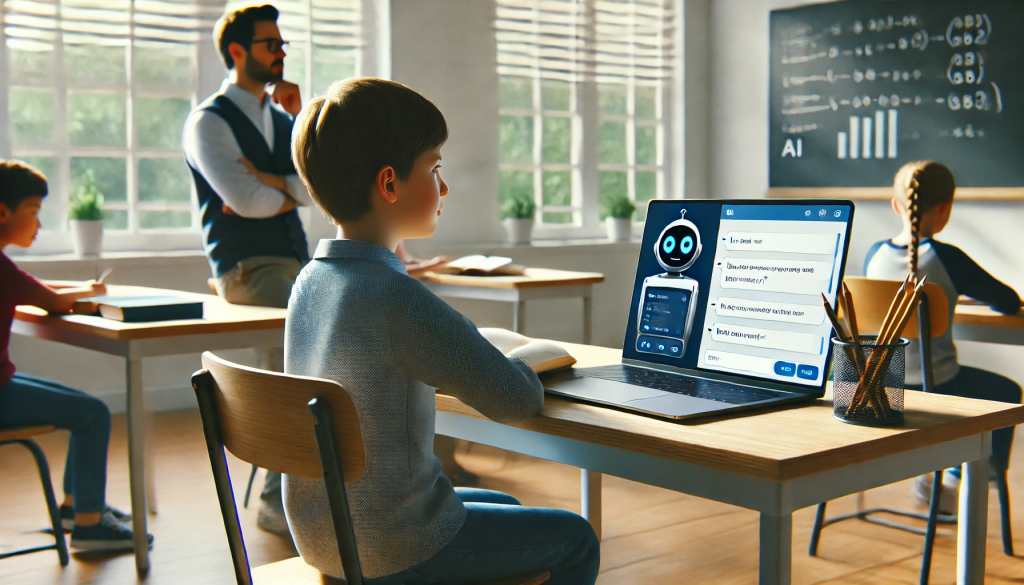
As colleges rush to regulate or restrict artificial intelligence tools in classrooms, a growing body of voices argues that higher education is making a fundamental mistake: treating AI solely as a cheating risk instead of recognizing its role as a legitimate accessibility and accommodation tool.
A recent opinion piece published by Inside Higher Ed makes the case bluntly: for many students with disabilities, AI is not a shortcut—it is an equalizer.
From “Academic Integrity” Panic to Accessibility Reality
Since the explosion of generative AI tools, universities have focused heavily on plagiarism detection, usage bans, and honor-code enforcement. While concerns about academic integrity are understandable, this narrow framing ignores a crucial reality: students with cognitive, neurological, learning, or language-related disabilities have long relied on technology to access education on equal footing.
AI tools now perform many of the same functions as traditional accommodations—but faster, cheaper, and more flexibly.
These include:
- Rewriting or simplifying complex text
- Organizing scattered thoughts into coherent outlines
- Assisting with grammar, syntax, and clarity
- Supporting students with ADHD, dyslexia, traumatic brain injuries, or processing disorders
For these students, AI does not replace learning. It enables it.
AI Fits Squarely Within Existing Accommodation Logic
Higher education already allows—and in many cases mandates—accommodations such as:
- Extended test time
- Note-taking assistance
- Speech-to-text and text-to-speech tools
- Writing centers and tutoring support
AI-assisted writing, summarization, and organization tools function in much the same way. They remove mechanical barriers so students can demonstrate understanding, reasoning, and mastery of subject matter.
The Inside Higher Ed argument highlights a growing disconnect: institutions that proudly promote “inclusive learning” are simultaneously moving to prohibit tools that directly support inclusion.
The Legal and Policy Blind Spot
Disability law has historically required institutions to provide “reasonable accommodations” that allow equal access to education. What qualifies as reasonable evolves with technology. Just as spellcheck and screen readers became normalized, AI-based tools are rapidly becoming part of the same continuum.
Yet many universities lack clear guidance on:
- When AI use qualifies as an accommodation
- How students can request permission without stigma
- How faculty should evaluate AI-assisted work fairly
This uncertainty creates a chilling effect. Students who most need these tools may avoid using them out of fear of discipline, while others use them freely without disclosure—ironically undermining the very integrity systems schools claim to protect.
A Tech Reality Higher Ed Can’t Ignore
From a technology perspective, AI is not a fringe tool—it is quickly becoming embedded across professional environments, from business to engineering to healthcare. Teaching students how to use AI responsibly and transparently is arguably more aligned with workforce preparation than banning it outright.
A blanket prohibition also risks disadvantaging students who already face systemic barriers, while rewarding those with stronger baseline writing, executive functioning, or access to private support.
Toward Smarter AI Policies
The argument emerging from Inside Higher Ed is not that AI should be unregulated. It is that policy must distinguish between misuse and accommodation.
Forward-looking institutions could:
- Explicitly recognize AI tools as potential disability accommodations
- Create disclosure-based frameworks rather than bans
- Train faculty on evaluating learning outcomes rather than production methods
- Align AI policies with existing accessibility and disability services
The Bigger Question
At its core, the debate is not about technology—it’s about values.
If higher education is serious about equity, accessibility, and preparing students for a tech-driven future, then AI cannot be treated solely as a threat. For many students, it is the bridge that makes participation possible at all.
Ignoring that reality may protect old assessment models—but at the cost of excluding the very learners institutions claim to support.




 TechBay.News
Leave a comment