By Tech Bay News Staff
Small pizzerias and local eateries across New England are increasingly turning to artificial intelligence to answer customer phone calls and take orders, a trend that reflects broader efforts in the restaurant industry to cut costs and deal with persistent labor shortages. But while restaurant owners see clear operational benefits, many regular customers have pushed back against the shift to automated receptionists.
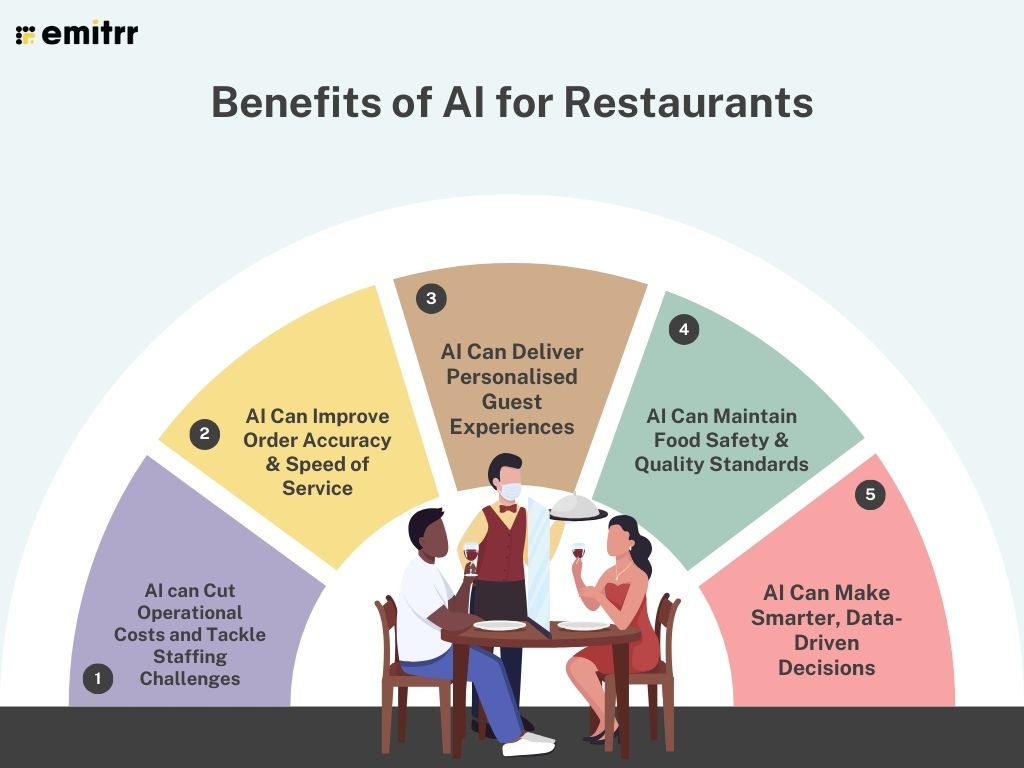
Why Restaurants Are Embracing AI
For independent restaurants like Crush Pizza in Massachusetts and family-owned Nick’s Place locations in New Hampshire, AI answering systems have become a practical solution to a long-standing business challenge. Owners report that AI receptionists reliably handle hundreds of calls per month, reducing missed orders and freeing up staff to focus on food preparation and in-store service. According to one owner, the system is delivering near-human accuracy while operating around the clock — something that’s hard for cash-strapped small businesses to match with human staff alone.
Voice AI technology used in these settings typically handles:
- Incoming phone orders and customer questions
- Order confirmation and special requests
- Upselling suggestions and add-ons
- Call routing when necessary
Companies such as Loman AI and others in the voice-ordering space have seen rapid growth as restaurants seek tools that answer calls 24/7 without additional labor costs. Many systems today even collect call data to personalize service for repeat customers and can process complex orders with high accuracy.
Across the broader U.S. pizza industry, voice AI adoption is rising. A 2026 report suggests that both semi-automated and fully automated phone ordering options are becoming more widespread, with systems proving competitive on accuracy compared to human operators. Even so, overall customer satisfaction tends to remain higher for human interactions.
Customer Frustration and Resistance
Despite the operational upside for restaurant owners, some customers aren’t embracing the change. In several documented cases, diners trying to resolve order errors — such as missing items — ended up stuck in loops with automated systems and unable to reach a human employee. These experiences have fueled complaints and one-star reviews, particularly among customers who dislike the lack of personal interaction or find the AI interfaces unintuitive.
Industry research underscores this mixed reception. Even as AI systems perform well on transactional accuracy, many consumers still prefer talking to a live person and report lower satisfaction with automated calls. The technology’s limitations — especially in understanding complex or nuanced requests — remain an obstacle for full customer acceptance.
A Growing Trend with Mixed Signals
Restaurant industry groups view AI phone answering as one of the most widely adopted forms of artificial intelligence in hospitality today, especially among independent and takeout-focused businesses where missed calls directly translate into lost revenue. Larger chains like Domino’s and Chipotle have employed similar technologies for years, and major pizza brands are experimenting with AI ordering enhancements at scale.
Still, the technology is part of a larger transformation in restaurant operations. Voice and conversational AI for ordering — from phone calls to drive-thrus and app integrations — is expanding, and restaurants are increasingly using AI not only to answer calls but also to upsell and personalize offerings.
What This Means for the Future of Dining
The adoption of AI to take phone orders exposes a central tension in the future of restaurant service: balancing efficiency and cost savings with the customer experience. For small eateries battling tight margins and staffing challenges, automated receptionists are a lifeline. For many customers, however, the loss of human interaction and occasional technology glitches are significant drawbacks.
As AI systems continue to evolve, their success may hinge on how well they blend convenience with empathy — a challenge that goes beyond pure technical performance and into the realm of human expectations.
Why Restaurants Are Letting AI Answer the Phone
A clear-eyed explainer on automation, margins, and the future of food service
Across the U.S., more restaurants are letting artificial intelligence answer their phones. What once sounded like a gimmick is quickly becoming standard practice—especially for pizza shops, takeout counters, and independent eateries operating on razor-thin margins.
This shift isn’t about chasing trends. It’s about economics, labor realities, and a hard truth many diners never see: missed calls mean missed revenue.
Here’s why AI is picking up the phone—and why the change is proving controversial.
The Core Problem: Restaurants Miss a Lot of Calls
During peak hours, many restaurants simply cannot answer every ringing phone.
Industry studies consistently show that:
- Restaurants miss 20–40% of incoming calls during busy periods
- Each missed call often equals $20–$40 in lost revenue
- Missed calls add up to thousands of dollars per month for small operators
For businesses built around takeout—pizza, Chinese food, fast-casual—phone orders are still a major revenue stream. When the kitchen is slammed, the phone is often ignored.
AI solves that problem instantly by answering every call, every time.
Why AI Is Attractive to Restaurant Owners
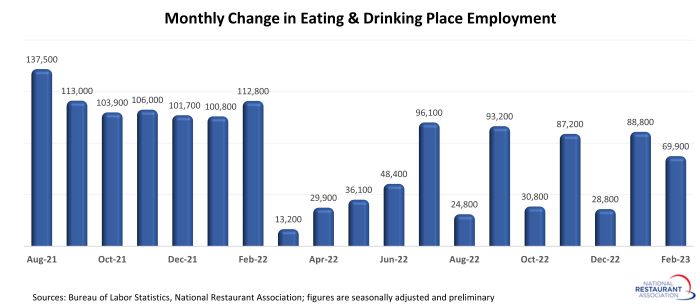

Restaurant owners aren’t adopting AI because it’s flashy. They’re doing it because staffing remains one of the industry’s biggest pain points.
Key pressures include:
- Persistent labor shortages in food service roles
- Wage inflation of 30–40% since 2019 in many markets
- High turnover for entry-level positions
- Thin profit margins that leave little room for extra staff
By comparison, an AI phone system typically:
- Costs less than one part-time employee per month
- Operates 24/7
- Doesn’t call out sick
- Never ignores the phone during a dinner rush
From a purely operational standpoint, the math is hard to ignore.
What These AI Systems Actually Do
Today’s restaurant phone AI is more advanced than early robocall-style systems.
Modern platforms can:
- Take full phone orders
- Confirm items and quantities
- Handle basic customizations
- Suggest add-ons and upsells
- Repeat orders back for accuracy
- Route complex calls to staff when needed
Some systems even recognize repeat callers and reference past orders.
Large chains like Domino’s have spent years refining automated ordering across phone, app, and voice assistants. Smaller restaurants are now adopting scaled-down versions of the same technology.
Is AI Actually Accurate?
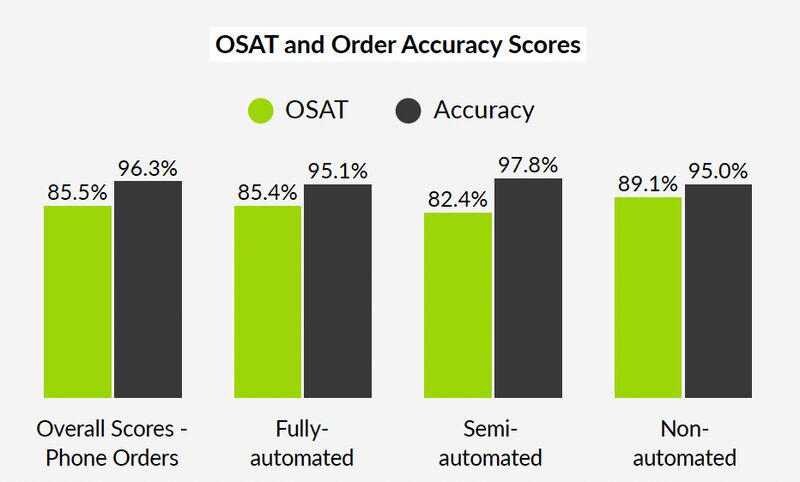
Accuracy used to be a major weakness—but that gap is closing.
Recent benchmarks show:
- AI accuracy approaching human-level performance for standard menu items
- Significant improvements in speech recognition and background noise handling
- Better performance with clearly structured menus (pizza, sandwiches, bowls)
Where AI still struggles:
- Unusual requests
- Strong accents or poor phone connections
- Customers trying to resolve order mistakes
The biggest source of frustration isn’t the AI itself—it’s when customers can’t reach a human when something goes wrong.
Why Customers Push Back
Despite the business case, many diners dislike AI phone ordering.
Common complaints include:
- Feeling “trapped” in automated loops
- Difficulty correcting errors
- Loss of personal interaction
- Confusion about how to reach a real person
For longtime customers, calling a local restaurant has always been part of a human relationship. Automation disrupts that expectation.
This is where many restaurants misstep: deploying AI without clear human escalation options.
The Real Tradeoff: Efficiency vs. Experience
The data shows a clear tension:
- AI improves efficiency and captures lost revenue
- Humans build trust and loyalty
Restaurants seeing the best results tend to:
- Use AI for order intake
- Make it obvious how to reach staff
- Step in quickly when problems arise
Those that treat AI as a wall instead of a bridge often face backlash.
What This Signals for the Future of Dining
AI answering the phone isn’t a passing fad—it’s an early sign of how automation is reshaping everyday services.
As technology improves, the question won’t be whether restaurants use AI, but how they use it:
- As a support tool—or a replacement
- As a convenience—or a barrier
For now, the phones are ringing, the margins are tight, and AI is answering.

 TechBay.News
Leave a comment