And Big Platforms Are Letting It Happen
By TechBay.News Staff
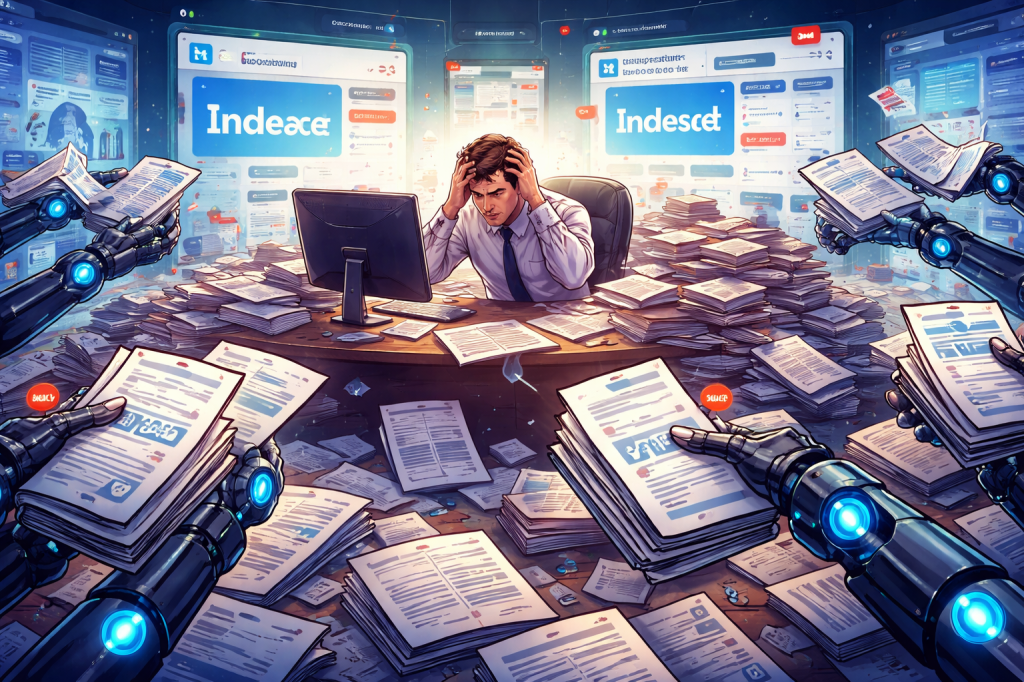
The online job market isn’t just competitive in 2026—it’s borderline dysfunctional. What once felt like a rational system for matching talent to opportunity has devolved into an AI-powered arms race that benefits platforms, punishes employers, and leaves serious job seekers buried in noise.
At the center of the chaos are major platforms like LinkedIn and Indeed, now flooded with applications generated not by humans carefully applying for roles—but by automated AI agents designed to spam-apply at scale.
This isn’t a fringe phenomenon. It’s the new normal.
From Job Boards to Bot Swarms
A growing ecosystem of AI tools—LazyApply, Sonara, JobCopilot, Simplify, and others—promises job seekers an edge by automating the entire application process. Upload your résumé, set a few preferences, and the software does the rest: scraping job boards, rewriting résumés to match keywords, and submitting hundreds or even thousands of applications per week.
The result? Volume without intent.
LinkedIn now processes roughly 11,000 applications per minute, a massive increase over just a few years ago. Recruiters report that most submissions are near-identical, keyword-stuffed, and clearly mass-produced. Human review is no longer the norm—it’s the exception.
So employers respond the only way they can: more automation.
The “AI Doom Loop”
This feedback cycle has become self-reinforcing:
- Applicants use AI to beat résumé filters.
- Employers deploy AI to reject résumés faster.
- Genuine candidates get filtered out with the bots.
- Everyone loses trust in the system.
Estimates suggest 75–90% of applications are now rejected automatically before a human ever sees them. The job market hasn’t become more merit-based—it’s become more algorithmic.
And when systems break, middlemen rush in to “fix” them.
Enter the Intermediaries
Platforms like Jobgether present themselves as a solution to application overload. They aggregate listings from LinkedIn, Indeed, and company sites, then reroute applicants into their own AI-driven portals—often requiring sign-ups, profile creation, match scoring, and sometimes paid upgrades.
Is this a scam? Not exactly.
But it is another layer between candidates and employers—another data-collection point, another gatekeeper, another algorithm claiming to know who’s “qualified.” For job seekers already exhausted by ghosting and rejection, it feels less like innovation and more like friction disguised as progress.
The irony is hard to miss: AI floods the market, then more AI is sold to help you survive the flood.
The Fraud Factor No One Wants to Talk About
There’s a darker edge to this story. Security analysts and recruiters increasingly warn that AI-generated fake applicants—complete with fabricated résumés, deepfake interviews, and stolen identities—are entering the system at scale, particularly for remote roles.
Some projections suggest one in four applicants could be fraudulent by the end of the decade.
That risk doesn’t just hurt employers. It justifies even harsher automated screening, further squeezing out legitimate candidates who don’t perfectly “optimize” for machines.
Who Benefits From This?
Not job seekers.
Not recruiters.
Not companies trying to hire real people.
The clear winners are platforms and tool vendors that monetize volume, subscriptions, and data. The incentives reward scale, not quality. Engagement, not outcomes. Automation, not judgment.
This is what happens when efficiency metrics replace human discretion—and when no one is accountable for whether the system actually works.
A Saner Way Forward (For Now)
Until the market corrects—or regulation forces transparency—job seekers are quietly adapting:
- Apply directly on company websites whenever possible.
- Network and seek referrals, which still outperform online applications by a wide margin.
- Use AI as a drafting assistant, not an application cannon.
- Avoid pay-to-play intermediaries unless they offer clear, verifiable value.
The uncomfortable truth is that the “easy apply” era is over. The more automated the system becomes, the less it rewards passive participation.
Bottom Line
The job market isn’t broken because of AI alone. It’s broken because platforms allowed automation to scale without guardrails—and then charged users to navigate the mess.
Technology was supposed to remove friction. Instead, it’s created an economy of filters, bots, and middlemen where effort is cheap, attention is scarce, and trust is eroding fast.
For serious professionals, the signal is clear: the human path—relationships, reputation, direct outreach—is once again the only one that cuts through the noise.




 TechBay.News
Leave a comment