By TechBay.News Staff
A new peer-reviewed study highlighted by 9to5Mac is reigniting a familiar debate in health and tech policy: can consumer technology meaningfully improve medical outcomes without expanding bureaucracy or over-medicalizing everyday life?
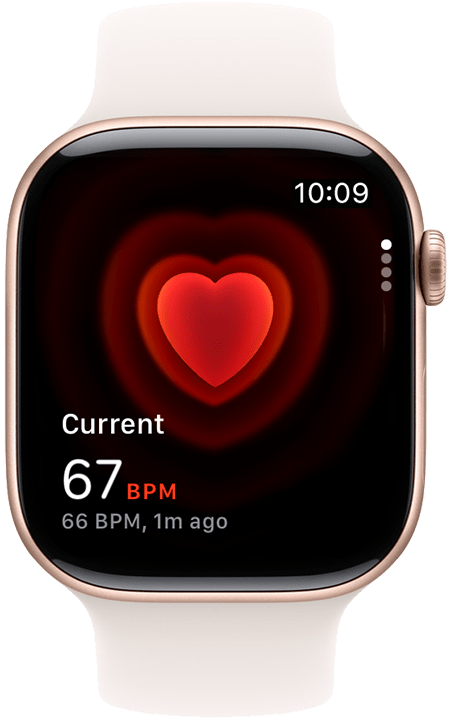
According to the study, use of the Apple Watch to detect atrial fibrillation (A-fib) proved at least as effective as standard clinical care in identifying the condition—while significantly increasing early detection rates. For a heart rhythm disorder that often goes undiagnosed until it causes stroke or hospitalization, that matters.
For center-right observers, the implications are bigger than wearables. This is a case study in how private-sector innovation can complement—not crowd out—traditional medicine.
What the Study Found
The research compared outcomes between patients using the Apple Watch’s heart-monitoring features and those receiving conventional care through physician visits and diagnostic testing.
Key findings included:
- Comparable clinical outcomes between Apple Watch monitoring and standard care
- Higher rates of early detection among watch users
- Reduced dependence on in-person visits for initial screening
- Improved patient engagement in monitoring their own health
In short: when people had access to always-on, passive monitoring, problems were caught earlier—often before symptoms forced an ER visit.
A Market-Driven Health Win
This is not a government mandate, a federal pilot program, or a new regulatory framework. It’s a consumer product people voluntarily buy, paired with FDA-cleared software, improving outcomes at scale.
That distinction matters.
For years, health policy has leaned heavily on centralized systems, reimbursement rules, and compliance-heavy care models that raise costs without necessarily improving results. The Apple Watch study suggests another path:
- Empowered patients instead of gatekept access
- Continuous monitoring instead of episodic checkups
- Preventive detection instead of reactive treatment
This aligns with a center-right view that innovation, competition, and consumer choice can outperform one-size-fits-all systems—especially when technology lowers friction rather than adding layers of administration.
Not “Big Tech Medicine”—But a Useful Tool
Critics often frame wearables as a slippery slope toward surveillance medicine or algorithmic overreach. The study undercuts some of that concern.
The Apple Watch does not diagnose A-fib. It flags irregularities and prompts users to seek professional evaluation. Physicians remain in control of diagnosis and treatment decisions.
That division of labor is key:
- Tech handles detection and data
- Doctors handle judgment and care
- Patients retain agency and choice
Rather than replacing clinicians, the device acts as an early-warning system—much like a smoke detector, not a fire department.
Cost, Access, and the Future of Preventive Care
From a policy standpoint, the most interesting question is cost.
A-fib-related strokes are among the most expensive—and devastating—cardiovascular events. If earlier detection reduces hospitalizations, long-term disability, and emergency interventions, the downstream savings could be substantial.
That raises uncomfortable questions for existing systems:
- Why does early detection so often depend on scheduled visits instead of continuous monitoring?
- Why are preventive tools slow to integrate unless reimbursed through complex billing codes?
- And why does innovation so often come despite the healthcare system, not because of it?
Consumer tech isn’t a silver bullet—but studies like this suggest it can bend the cost curve without expanding government control or sacrificing care quality.
The Bigger Picture
The Apple Watch A-fib study fits a broader pattern: technology companies solving real-world problems faster than institutional systems can adapt.
For Tech Bay News readers tracking the intersection of innovation, regulation, and public trust, this is a reminder that not every tech advance needs a new agency or sweeping reform. Sometimes, progress looks like a product people choose—because it works.
And in healthcare, that may be the most disruptive idea of all.




 TechBay.News
Leave a comment