By Tech Bay News Staff
Elon Musk is back with another sweeping prediction—this time promising a future where humanoid robots are as common as smartphones, and artificial intelligence becomes “smarter than all humans combined” within the next five years.
Speaking at a recent technology event covered by Barron’s, Elon Musk argued that advances in robotics and AI are accelerating so quickly that society must prepare for a world fundamentally reshaped by intelligent machines. His vision: mass-produced robots handling physical labor, paired with superhuman AI systems driving productivity, discovery, and—potentially—disruption.
Robots for the Mass Market
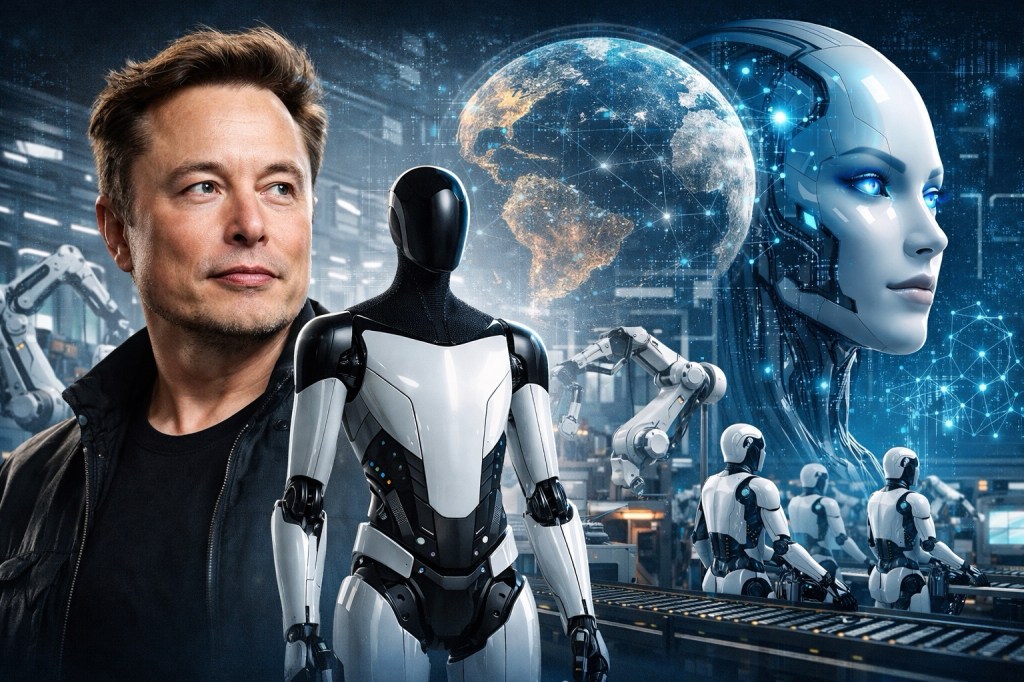
Musk’s most tangible claim centers on humanoid robots becoming affordable and widely available. At Tesla, he has pushed the development of Optimus, a general-purpose robot designed to work in factories and eventually in homes.
According to Musk, once robots can be produced at scale, their cost could drop dramatically—potentially below that of a car. That would make robotic labor cheaper than human labor in many sectors, from logistics and manufacturing to elder care and household tasks.
From a center-right economic perspective, the promise is obvious: productivity gains, reshoring of manufacturing, and relief for labor shortages. But it also raises a familiar concern—what happens to workers displaced faster than new jobs are created?
AI Smarter Than Humanity?
Musk’s more provocative claim is his timeline for artificial general intelligence (AGI). He predicts that within five years, AI systems will exceed the collective intelligence of humanity.
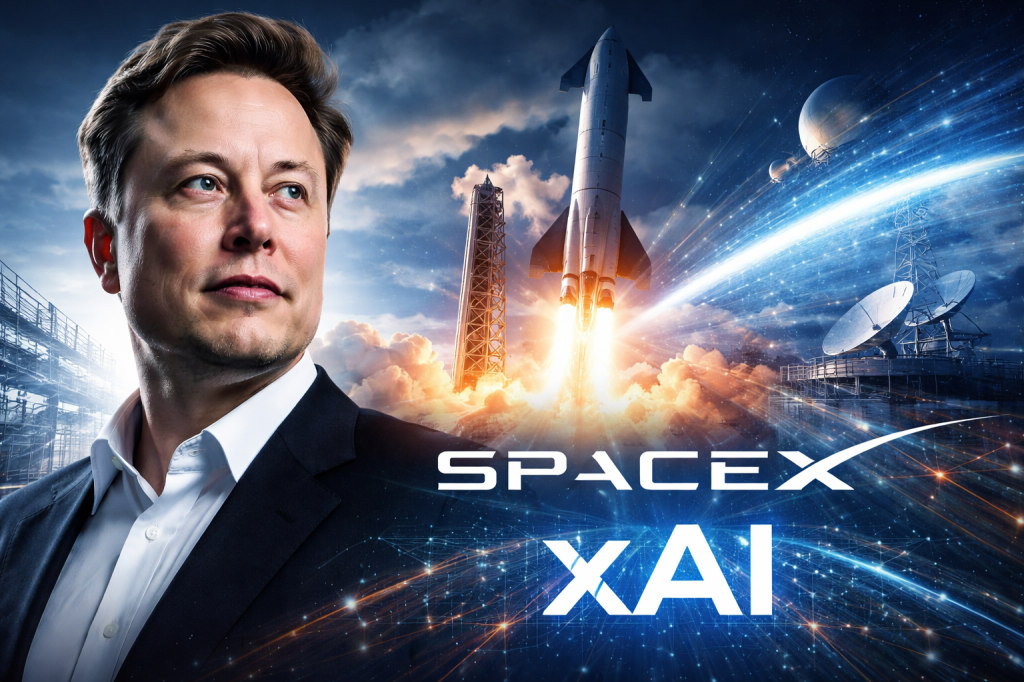
Through ventures like xAI, Musk has argued that increasingly powerful models—paired with massive compute and real-world data—are pushing AI toward general reasoning and autonomy. He has repeatedly warned that this capability, if left unchecked, could pose existential risks.
Notably, Musk has taken a more cautious public stance than some Silicon Valley peers, calling for stronger safety frameworks and alignment research—even as his own companies race to build more powerful systems.
Opportunity vs. Control
For policymakers, Musk’s vision highlights a growing tension. On one hand, advanced AI and robotics could unlock enormous economic growth, boost national competitiveness, and strengthen U.S. leadership against rivals like China. On the other, unchecked deployment could hollow out middle-class jobs, centralize power in a handful of tech firms, and strain social institutions.
Center-right thinkers often emphasize market-led innovation—but also the need for clear rules of the road. That may include:
- Guardrails on AI deployment in critical systems
- Workforce retraining incentives rather than permanent dependency programs
- Antitrust scrutiny as robotics and AI concentrate capital and influence
A Future Arriving Faster Than Expected
Musk has a long history of ambitious timelines—some missed, others uncannily accurate. Whether robots truly become household staples within a decade remains to be seen. But even skeptics acknowledge the pace of change is accelerating.
The real question isn’t whether AI and robotics will transform society. It’s whether our economic, legal, and cultural systems will adapt fast enough to keep human agency—and accountability—at the center of the machine age.
Tech Bay News will continue tracking how AI, robotics, and emerging technologies reshape industry, labor, and public policy.

 TechBay.News
Leave a comment