By TechBay.News Staff
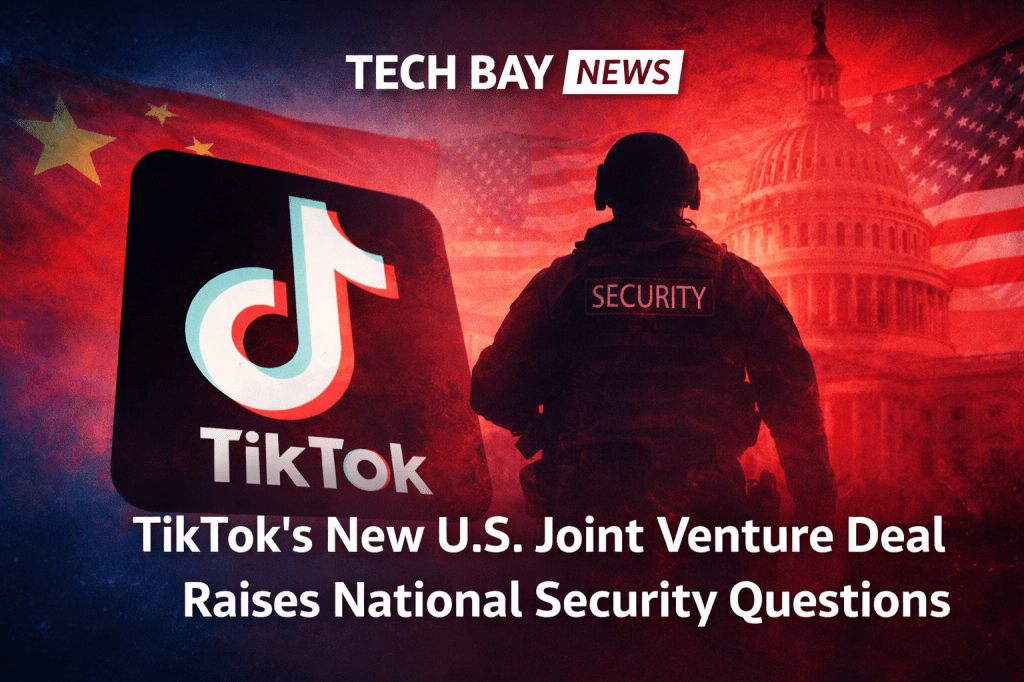
A last-minute deal by TikTok to form a new U.S.-based joint venture may keep the popular social media app online for American users—for now—but critics say it stops well short of resolving the national security concerns that have driven bipartisan scrutiny in Washington.
According to reporting by Reuters, TikTok’s Chinese parent company, ByteDance, finalized an agreement late Thursday to restructure TikTok’s U.S. operations into a new corporate entity designed to comply with federal divestment requirements and avoid a looming nationwide ban.
A Deal to Avoid a Ban—Not to Eliminate Risk
Under the arrangement, TikTok’s U.S. operations would be placed into a newly created joint venture with American investors, while ByteDance would retain a minority ownership stake. The deal is structured to meet the formal requirements of U.S. law, which demands reduced foreign control, but it leaves open a critical question: who ultimately controls TikTok’s algorithms, data flows, and strategic decisions?
Lawmakers from both parties have long warned that TikTok’s underlying technology—and its ties to China—pose risks that cannot be mitigated through surface-level corporate restructuring. Center-right critics argue the deal appears designed more to satisfy legal thresholds than to meaningfully insulate U.S. user data from foreign influence.
“This looks like compliance by spreadsheet, not compliance by substance,” one former national security official told Reuters.
Algorithms Still the Core Concern
While TikTok has repeatedly claimed it does not share U.S. user data with the Chinese government, skeptics point out that ownership stakes alone do not determine control. Recommendation algorithms, source code access, and backend engineering authority remain the heart of the platform’s power.
Unless those systems are fully controlled, audited, and operated by U.S. entities, many policymakers argue the security risk remains unresolved—regardless of how ownership percentages are divided on paper.
A Test Case for U.S. Tech Sovereignty
The TikTok standoff has become a defining test of how the United States handles foreign-owned digital platforms that operate at massive scale inside American borders. Unlike traditional trade disputes, this fight centers on data, influence, and information flows—assets that are increasingly viewed as strategic infrastructure.
For center-right lawmakers, the concern is not censorship or social media content moderation, but whether the U.S. government is allowing a geopolitical competitor to maintain leverage over a platform used by more than 150 million Americans.
What Comes Next
The deal is expected to face intense scrutiny from federal regulators and Congress in the coming weeks. Lawmakers have already signaled that cosmetic restructuring will not be enough if ByteDance retains meaningful influence behind the scenes.
For now, TikTok lives to fight another day—but the broader debate over data sovereignty, national security, and foreign tech influence in the U.S. is far from over.



 TechBay.News
Leave a comment