Tech convenience meets accountability questions
By TechBay.News Staff
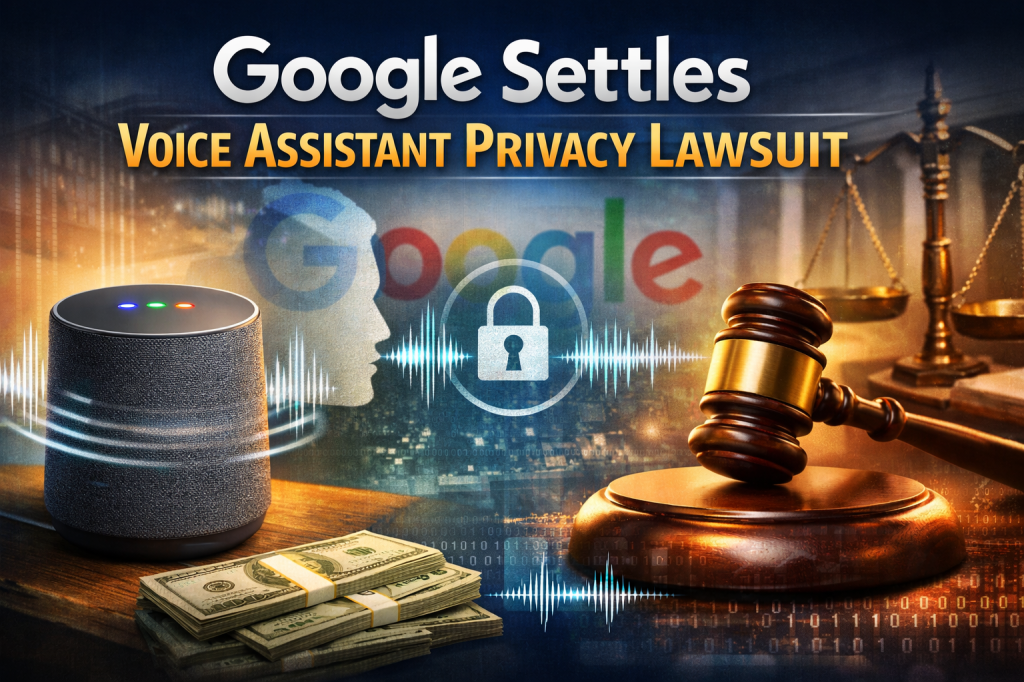
Google has agreed to pay $68 million to settle a lawsuit alleging that its voice assistant technology recorded users without proper consent—an outcome that reignites long-running concerns about privacy, transparency, and the unchecked growth of always-on consumer tech.
The settlement, reported by TechCrunch, resolves claims that Google collected and stored audio recordings from users who did not knowingly activate its voice assistant. While Google denies wrongdoing, the company opted to settle rather than continue litigation.
What the lawsuit alleged
Plaintiffs argued that Google’s voice assistant was triggered unintentionally, capturing snippets of private conversations and transmitting them to company servers. These recordings, they claimed, were retained longer than users expected—and without sufficiently clear disclosure.
Google has maintained that recordings only occur after an activation phrase and that users can manage or delete stored audio. The settlement, however, suggests that courts—and consumers—remain unconvinced that current disclosures meet reasonable expectations.
A familiar Silicon Valley pattern
This case fits a broader trend in Big Tech: rapid deployment first, guardrails later. Voice assistants, smart speakers, and ambient AI tools are increasingly embedded in homes, cars, and workplaces. Yet oversight remains fragmented, with privacy protections often enforced after harm is alleged rather than before technologies are rolled out.
From a center-right perspective, this raises two parallel concerns:
- Consumer trust – Markets function best when users understand what they’re buying. If people believe devices are listening when they shouldn’t be, adoption suffers and innovation stalls.
- Regulatory whiplash – When companies fail to self-police, they invite heavy-handed regulation that can sweep far beyond the original abuse.
The real issue: consent and clarity
The core problem isn’t voice assistants themselves. It’s ambiguity. Consumers were promised convenience—hands-free searches, smart homes, seamless integration. What they didn’t clearly sign up for was the possibility that their living rooms could double as data collection zones.
For companies like Google, the lesson is straightforward: clearer opt-in standards, simpler privacy controls, and stronger internal compliance are cheaper than litigation and reputational damage.
Why this matters for the tech sector
The $68 million settlement is a rounding error for Google’s balance sheet, but it sends a signal across the industry. As AI becomes more embedded and more autonomous, the tolerance for vague consent and buried disclosures is shrinking.
If tech companies want to avoid a future defined by lawsuits and aggressive regulation, they’ll need to prove they can respect user boundaries without being forced to do so by courts.
For now, this settlement serves as another reminder that innovation without accountability is no longer a viable business strategy—even in Silicon Valley.




 TechBay.News
Leave a comment