By TechBay.News Staff
As winter storms slam large parts of the U.S., a new class of consumer tech is getting its first real-world stress test: autonomous robot snow blowers. Marketed as hands-free, labor-saving solutions for homeowners, these machines are now being evaluated not in slick demo videos—but in heavy snow, icy conditions, and long overnight accumulations.
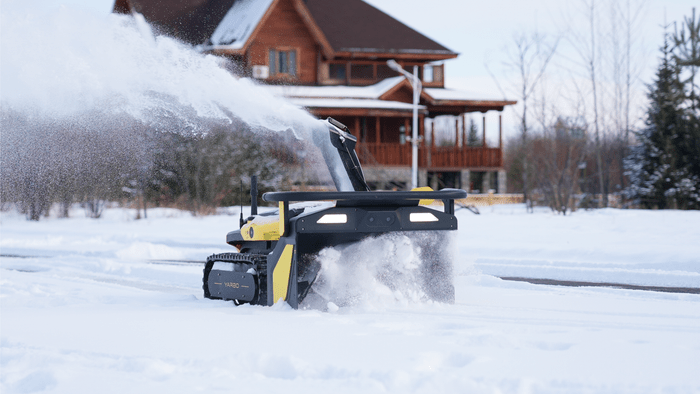
One of the most closely watched products is the Yarbo robotic snow blower, which recently drew attention after being put to work during a significant winter storm.
Automation Meets Reality
Robot snow blowers promise what many homeowners want: no shoveling, no gas engines, and no waking up early to clear the driveway before work. Using GPS navigation, boundary mapping, and obstacle detection, these machines are designed to autonomously clear snow with minimal human input.
But winter storms are not controlled environments.
Heavy, wet snow, frozen slush, plow-packed berms, and uneven driveways expose the limits of current consumer robotics. In real-world use, robot snow blowers have shown they can handle moderate snowfall reliably, but performance degrades as conditions become more extreme.
That’s not a failure—it’s a reality check.
What the Tech Gets Right
From a technology standpoint, these systems represent a genuine leap forward:
- Autonomous navigation without buried guide wires
- Electric operation, avoiding gas engines and emissions
- Multi-season platforms, where the same robot can be adapted for snow removal, lawn mowing, or yard hauling
- Remote monitoring, allowing homeowners to supervise from indoors
For aging homeowners, people with disabilities, or those juggling demanding schedules, this kind of automation isn’t a luxury—it’s access.
Where the Hype Runs Ahead of Capability
Where skepticism is warranted is in marketing. Some promotional materials imply near-human reliability in all conditions. In reality:
- Deep, icy snow still challenges blade clearance
- Snowbanks left by municipal plows often require manual intervention
- Battery performance drops in extreme cold
- Recovery from errors (stuck wheels, blocked intakes) can require hands-on fixes
This mirrors what we’ve seen in other automation sectors: early autonomy excels at routine tasks, not edge cases.
A Familiar Pattern in Consumer Robotics
The trajectory here looks a lot like early robot vacuums or self-driving driver-assist systems:
- Early adopters accept limits
- Software updates and hardware revisions improve reliability
- Expectations slowly recalibrate from “replacement” to “augmentation”
In that sense, robot snow blowers are not replacing homeowners—they’re replacing the worst part of winter maintenance.
The Bigger Tech Story
What matters most isn’t whether today’s robots can clear every blizzard flawlessly. It’s that:
- Outdoor consumer robotics is maturing
- AI navigation is leaving the lab and entering messy environments
- Labor-saving tech is responding to real demographic pressure, not novelty demand
As labor shortages grow and populations age, automation at the household level will matter as much as automation in warehouses or factories.
Bottom Line
Robot snow blowers aren’t magic—and they aren’t ready to replace every shovel or snowplow. But they are real, functional tools that work well within defined limits.
For homeowners willing to treat them as assistive technology rather than miracle machines, they represent a meaningful step forward in practical, everyday automation.
And like most useful tech, they’ll get better not through hype—but through winters like this one.




 TechBay.News
Leave a comment